
This retirement savings vehicle gets its name from Section 457 of the tax code. It is a type of non-qualified deferred compensation. The employee defers money into the 457 account on a pre-tax basis. Any growth in the account doesn’t get taxed until it is ultimately withdrawn years down the road, in retirement. Withdrawals are taxed then at ordinary income tax rates.
Where do you find a 457 deferred compensation plan? At government entities, and less commonly, non-church controlled tax-exempt organizations. Consequently, you won’t find a 457 plan at a for-profit corporation.
If your employer sponsors a 457 plan, how much can you put in? Same limits as with 401ks and 403bs: up to 100% of compensation, capped at $24,500 in 2026.
457 Deferred Compensation Plan Coordination & Catch-up
If you have two jobs, one with your city, and another with a private company, you can contribute to both retirement plans. You have two separate and unrelated limits: You can defer $24,500 to both. On the other hand, if you worked for two different for-profit employers, you’d have only one $24,500 annual contribution limit to use between the two employers’ plans. This is a huge advantage to participating in a 457.
Age 50 Catch-Up
An employee over age 50 can actually defer more than the $24,500 limit. There are two different so-called catch-up provisions:
- During the 3 years before the employee’s Social Security retirement age there is a complex formula used to calculate over-50 catch-up. The limit is increased to the lesser of: (a) twice the normal limit, or (b) the normal limit plus the difference between the normal limit and the actual amount deferred in the previous 3 years.
- Participants in a governmental 457 have a flat catch-up amount of $8,000 once they are age 50, making total deferrals $32,500. Only the greater of the special catch-up or $8,000 may be used in the 3 years before normal retirement age.
- New for 2026 under SECURE 2.0: participants ages 60, 61, 62, and 63 are eligible for an even higher “super catch-up” of $11,250 in place of the standard $8,000, bringing their total to $35,750.
Let’s say you have two jobs. You are a self-employed tradesman with a few employees, and also a municipal employee. You sponsor a 401k at your workplace and are also eligible to defer into the municipality’s 457 deferred compensation plan. Taken together, you can defer $49,000 this year. If you are over age 50, you can defer an additional $8,000 into both your 401k and your 457, for a total additional deferral of $16,000. Not sure what you’d live on, but if you are a truly motivated saver it is do-able.
Where Do We See 457 Plans in Common Use?
Largely for public employees. The State of Florida sponsors a 457 deferred compensation plan, as do Miami-Dade County and the City of Miami. Investors choose from a universe of mutual fund sub-accounts, so the participant is exposed to market risk as in any defined contribution plan.
What Happens When You Retire?
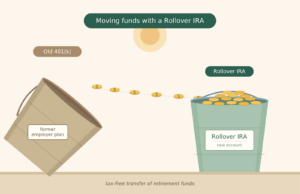
There are different rules for governmental and non-governmental 457s. The governmental 457 can simply be rolled into a Traditional IRA. At age 73 the required minimum distribution rules apply. The non-governmental 457 must be distributed, however. No other options. That distribution could run the taxpayer up into the highest brackets in that year, and wipe out 40% of the savings!
No 10% Penalty!
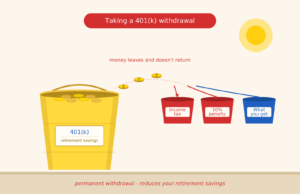
A huge difference between 457 distributions and qualified plan and IRA distributions occurs before age 59½. There is no 10% penalty! If you are, say, 55 and want to retire early and live off of monthly distributions from your IRA – bad plan! Every withdrawal will be subject not only to ordinary income tax, but also to a 10% penalty on the amount withdrawn. This penalty goes away at age 59½. (There are a few exceptions. Substantially equal payment is one; disability is another.) There is no such penalty with a 457 plan, however. This is so important for public sector employees planning early retirement! You won’t be able to access Traditional IRAs and qualified plans at work before 59½ without the 10% penalty. So the strategy is to fund your 457 accounts with enough money to live on until you turn 59½ and the 10% penalty goes away.
Please take a moment to read Don’t Make These Two Mistakes with Your 457 Plan!