
401k Plan Basics
The technical name for the 401k plan is an employer-sponsored defined contribution plan with 401k provisions. Money goes into your account in different ways:
- You, the employee, defer (i.e. contribute) part of your salary on a pre-tax basis to invest for the future.
- Your employer makes profit-sharing contributions. These can vary year-by year. Employer contributions serve as an incentive for you, the employee, to work hard and make the company successful.
- Your employer may make matching contributions.
- You may receive forfeitures. Your plan has a vesting schedule, which tells you how much of the employer’s contribution you’ll be able to take with you should you go work elsewhere. If an account is not fully vested, often the dollars that revert back are spread out to all the other participants.
Typically you’ll be given various mutual fund options ranging in market risk from very conservative to moderately aggressive. You do not pay federal income tax on your deferrals into the plan, but you still pay FICA taxes on those deferrals.
The amount you can contribute is capped at 100% of pay up to $24,500 annually for 2026 (up from $19,500 in 2020 when this post was first written). You can contribute an additional $8,000 in catch-up contributions once you reach age 50, for a maximum of $32,500. Under a new SECURE 2.0 provision, employees ages 60, 61, 62, and 63 are eligible for an even higher “super catch-up” of $11,250, bringing their total to $35,750 for 2026. Note: beginning in 2026, high earners who made more than $150,000 in prior-year FICA wages are required to make catch-up contributions on a Roth (after-tax) basis.
Keeping the above in mind, here are three rules of thumb when it comes to your 401k plan as a young investor:
1. Contribute at least up to the employer match
To encourage employees to defer into a 401k plan, employers often provide a company match as part of 401k plan benefits. For example, a company matches 50 cents on every dollar you defer from your salary into the 401k plan up to 5% of salary. Your annual salary is 100k, so you defer $5,000 every year into your 401k and the company matches those dollars up to $2,500. Consequently, if you defer $7,000 the company will still match 50 cents on the dollar up to 5%. That is still $2,500. It’s free money up to the company match, so don’t leave it on the table.
2. Consider the Roth option
Roth savings are also an important consideration worth exploring. That is, is it more important to get tax deductions today or tax-free distributions tomorrow?
Your employer may have a Roth option for your deferrals. The employer’s contributions will always be pre-tax, because he is deducting them as business expenses. But your after-tax deferrals can be held in a Roth account.
To contribute to a Roth IRA directly you need to be below the IRS income phase-out limit. For 2026, the phase-out begins at $153,000 for single filers and $242,000 for married couples filing jointly (up from $124,000/$196,000 in 2020). With a two-income household it is easy to become phased out of eligibility to contribute to a Roth IRA directly. More on this in my blog entry on Roth IRAs. But there is no income phase-out in choosing the Roth option in your 401K – a key advantage.
3. Start early
Set up an automatic draft and let it rip! Most people wait much too long to begin disciplined savings. By starting early you have a much greater potential to be a successful investor. Start good habits, and pay yourself first before paying the bills. By putting away just $250 per month, after 40 years assuming an average return of 8%, you’ll have a little north of $872,000 in your account. Double it to $500/month, and you’re looking at $1,745,504! That doesn’t even include a company match or additional employer contributions.
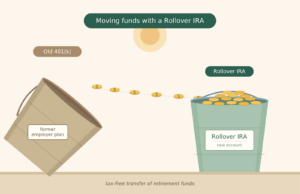
Now, you and I know that you won’t be at the same company for 40 years. That just doesn’t happen anymore. But when you do separate from service, you may be able to rollover your 401K into your new employer’s plan, or you can rollover your 401k plan into a personal IRA and continue your savings plan in that vehicle.
Be sure to alrso read The 401(K) and Young Investors.