
To me an annuity in an IRA is usually a dead giveaway that the client worked with a salesperson and not a financial planner.
Annuities, like any other tool, are not inherently bad. They work best when they do the job they were designed to do — and that job is income distribution. The job of a retirement account, however, is asset accumulation.
Where Are Annuities Best Used?
Annuities can be a useful accumulation vehicle for those with a conservative investing outlook. If you can accept absolutely no investment risk then a fixed annuity is for you. If you have non-qualified money to invest (that is, not retirement funds) and you’re in a high tax bracket, then an annuity might be a good option for you to defer current income taxation.
As a distribution vehicle, an annuity is also a safe way to create a perpetual stream of income without market risk. A pension payment is simply another name for an annuity. Also, the use of a single premium immediate annuity, or SPIA, has particular application in estate planning.
But an annuity in an IRA? Why???
Annuity in an IRA
An IRA, or Individual Retirement Account, is an account registration, not an investment. An IRA, by definition, gives its owner tax deferral on all growth within the account. Annuity products are among the investments that may be held within an IRA. Others include stocks, bonds, and mutual funds. If you own an IRA, take a look at one of your statements. If there is an annuity in an IRA, time to take a second look. Same thing with your 401(k) — no need for an annuity there.
How Do You Know?
Open up a statement from your retirement account. Look at your account number. If it says contact number, then you’re in an annuity. If it says account number, then you’re likely invested in mutual funds.
My Objection
My objection is that IRAs and annuities both feature tax deferral. Annuities come with fees that are netted out of the return. So why pay for the tax deferral that you already have by virtue of the account registration?
Variable annuities in particular are costly. They come with mortality and expense fees which are disclosed deep in the prospectus, typically in the 1.0%–1.5% range annually. There may also be rider fees. When held in an IRA, annuity fees needlessly eat away at your returns. On the plus side, a good argument can be made for holding the conservative allocation of a portfolio in an indexed or fixed annuity — particularly if a guaranteed lifetime income rider (GLWB) is desired to create an income floor that the IRA alone cannot guarantee.
Besides paying for tax deferral which you already have, annuities also have stiff surrender penalties which keep you from getting at your money if you need funds in a pinch. Some annuity surrender schedules can be 10+ years long!
Annuities Can Indeed Be Useful Tools
Annuities can be both accumulation vehicles as well as distribution vehicles. There is nothing inherently good or bad with them. The question is: Is this the right tool for me? Will it accomplish what I need? Here is my thinking: If I’m putting a switch plate back up on a wall after painting, and you hand me a Phillips head screwdriver, does that mean it is a bad tool? No, of course not — only the wrong tool. I needed a flat head screwdriver. This is my point with financial planning: we bring our expertise to you to choose the appropriate financial tool. The tool that will help you accomplish your goals.
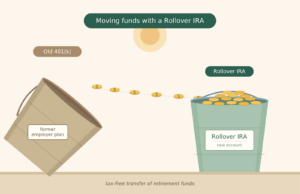
In fact, some variable annuities have a guaranteed withdrawal feature, which guarantees a stream of income over many years which could rise. But would I put my money there during the accumulation phase? Probably not; I’d look into this feature once I needed the stream of income to commence. When you retire you can roll out your 401K to as many different IRA accounts as you like, even to one funded by an annuity.
A Conflict of Interest
While annuities are appropriate in certain circumstances, I find that most clients simply do not have the special planning needs that make an annuity in their best interests. Florida Retirement System pension participants are heavily marketed by annuity salespeople. Why? They often have DROP payments — lump sums from the Deferred Retirement Option Program. Annuities pay a commission, usually somewhere in the 3% to 7% range. A teacher retiring with a $300,000 DROP payment represents a potential $9,000 to $21,000 commission. This is a HUGE conflict of interest with the client!
Retiring Soon?
If you’re retiring soon, have a CERTIFIED FINANCIAL PLANNER™ with CameronDowning examine your options. We give advice with a fiduciary standard of care: your best interests first, foremost, and always.
For more basic annuity information, please read Annuities Part I: The Accumulation Phase and Annuities Part II: The Distribution Phase.