
457 plans are a type of retirement account offered largely to certain governmental employees. We see them available typically to police officers and firefighters as an avenue for supplemental retirement savings. The 457 is a place to accumulate retirement savings over and above your pension. As such, the 457 is a type of non-qualified deferred compensation, rather than a qualified plan that comes under ERISA (Employee Retirement Income Security Act) legislation. For 457 basics, please read What is a 457 Deferred Compensation Plan?
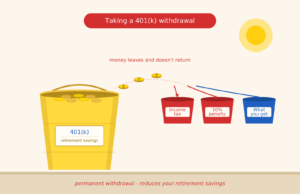
There were a lot of terms there, but they’re important, so let me break it down a bit. ERISA legislation determines whether an employer’s retirement plan is qualified or not — qualified meaning that the employee can defer income to the retirement account on a pre-tax basis. The most popular of these is the 401(k) plan. Others are profit sharing plans and money purchase plans. There are maximum deferral amounts each year ($24,500 in 2026), and maximum amounts that an employer can contribute and deduct. Employees who withdraw funds before age 55 — the year of separation from service — have a 10% tax penalty on the amounts withdrawn.
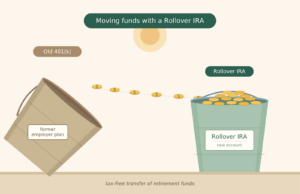
Typically when people retire they roll their funds out of the employer-sponsored retirement plan into an IRA. But the IRA has the same 10% early withdrawal penalty for most withdrawals, but the threshold age is now 59½ (there are a few exceptions).
With those two ages in mind — 55 and 59½ — we come to the first mistake:
Mistake #1: Don’t Roll the Money into an IRA If You’re Not Yet 59½
When you withdraw funds from a governmental 457 plan, no matter your age, there is no 10% penalty! Say you retire from the County at age 52, with 30 years of service, and begin to draw your pension. Your 457 funds are completely accessible to you with no tax penalty. But — if you move those dollars into an IRA, you’ve just given yourself a 10% penalty on any withdrawals for the next 7½ years. Bad move! And if anyone is advising you to do so, that person is either not knowledgeable, or not giving advice in your best interests, or perhaps both.
What’s the strategy then? Lots of people want to retire in their 50s. Ideally, you would see a financial planner way back when you first began thinking about retirement. You’d think about a retirement age, and work on a cash flow worksheet for that retirement. If you have a pension and can live on that until your Social Security comes (age 67 is now the full retirement age for those born in 1960 or later), then great. In our example you’re going to need to withdraw from your retirement account for those 15 years until Social Security kicks in. The absolute last thing you want to do with your 457 funds is put them in an IRA. Leave it alone! Withdraw funds as needed and pay no 10% tax penalty.
Mistake #2: Don’t Stick It in an Annuity
I am not a fan of annuities as accumulation vehicles. Annuities themselves are used as both accumulation and distribution vehicles. As accumulation vehicles, they offer the advantage of tax-deferral. But in your 457 you already have tax-deferral. So why would you want to take on an annuity surrender schedule of 5–10 years for a benefit you’ve already got? If someone is pitching an annuity to you for your retirement money, you are dealing with a commissioned salesperson, rather than a professional financial planner who is held to a fiduciary standard of client care. There’s a big difference.
If you’ve already made the mistake and rolled your funds into an IRA funded by an annuity, you can undo the transaction but it will take several years. Annuities typically have a 10% free annual withdrawal amount — that is, any money you withdraw during the surrender period that exceeds 10% of the account value will incur a surrender charge. You can open another IRA, and transfer the 10% distributions each year until the surrender period is over. You can then engage a professional money manager for the IRA, but you’re still subject to the age 59½ tax penalty. Or just eat the penalty.
The point is that annuities are tools designed to do a certain job, just as any other tool on your workbench or in your kitchen is designed for a certain function. But they are sold on commission — typically 3% to 7% — and consequently there is a significant conflict of interest between you and the salesperson. And yes, I know the pitch: you’ll never lose a cent. You participate in the market gains but never the losses. True. But remember: the house always wins. The products are structured to produce a profit for the issuing company. Best to hire a competent investment manager.