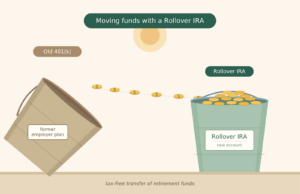

A Roth conversion means taking your Traditional IRA, or some portion of it, and turning it into a Roth IRA. Whatever dollars are converted become taxable to you right then and there.
Who Should Consider a Roth Conversion?
In a previous post we went into the Roth IRA — how it works, and how to make it work for you. In this blog post we delve into the topic of Roth conversions. Before launching in, though, we’ll begin with a brief review of IRS rules on getting money into your Roth IRA.
Your contribution limits are $7,500/year, or $8,600 if age 50 or older (2026). You must have earned income to contribute — W-2 income or income from a trade or business. Investment earnings and Social Security income do not count. Additionally, the IRS begins to phase out a taxpayer’s ability to make a Roth contribution if modified adjusted gross income (MAGI), as a single taxpayer, exceeds $153,000, with contributions completely phased out above $168,000. For married taxpayers filing jointly, the phase-out begins at $242,000 and contributions are eliminated above $252,000 (2026).
What Are the Benefits?
There are two principal benefits. Withdrawals in retirement from a Roth IRA are not taxable. Would you rather have a $500,000 IRA from which all withdrawals are taxable, or a $500,000 Roth IRA from which all distributions are free of taxation? The latter of course.
An additional benefit from the Roth is that there is no required minimum distribution, as there is with the Traditional IRA. Under current law (SECURE 2.0), RMDs from Traditional IRAs begin at age 73 for those born between 1951 and 1959, and at age 75 for those born in 1960 or later.
I’m Over the Income Phaseout!
You still have options. You can convert your Traditional IRA into a Roth without limit — there is no income restriction on conversions, only on direct contributions. Conversion means that you set up a separate Roth IRA, and then transfer funds from the Traditional IRA into the Roth. The dollars transferred are fully taxable at ordinary tax rates. The trade-off, then, is a tax hit now, in favor of a tax-free stream of income in retirement that could last for years and years.
The tax issue here makes sense in that you didn’t get taxed on your contributions to your Traditional IRA (they were made before taxation), so they get taxed now. But all the earnings up to the conversion point also get taxed now.
Consider a Partial Conversion
You can, and maybe should, convert a little at a time to manage the taxation. Here’s an example: We have one client who unfortunately became disabled. His disability income insurance payments are not taxable, so he has essentially no taxable income. We recommended that he gradually convert his Traditional IRA to a Roth, a little bit at a time over several years, enough to use up the standard deduction. The result is that when his income from disability insurance ceases at age 65, he’ll then have a non-taxable source of income from his Roth to last him the rest of his life. This is good planning.
5-Year Rules
Once you’ve converted, there are some tax caveats. Converted amounts must remain in the Roth for 5 years before withdrawal if you are under age 59½. If converted amounts are withdrawn before 5 years are up and you are under 59½, they become subject to a 10% tax penalty. Note that each conversion starts its own separate 5-year clock. If you are already 59½ or older at the time of withdrawal, the 5-year rule for converted amounts does not apply to the penalty. Any earnings withdrawn before age 59½ on the converted amount are also taxed, with a 10% penalty.
Re-Characterizing a Conversion Is No Longer Possible
It used to be that if you did a Roth conversion, you had a limited ability to undo it. Say you converted $100,000. The market dropped, and now it is only worth $80,000. You could undo the conversion, re-file taxes for the year of the conversion, and receive a refund. Then you’d be taxed on the $80,000 that gets re-characterized in the next tax year.
This is no longer possible. Re-characterization of Roth conversions was eliminated by the 2017 Tax Cuts and Jobs Act, effective January 1, 2018.
Look for Opportunities
Roth IRAs are such a great deal tax-wise that we like to see our clients look for conversion opportunities. Here are a few:
- You’ve had a period of unemployment, so your income is lower. Consider a partial conversion.
- You’ve made large charitable contributions in one tax year. Consider offsetting the charitable deduction with a partial Roth conversion.
- A spouse stops working, so your income will be lower this year. Consider a partial Roth conversion.
- A child is born to you. Congratulations! That means a $2,200 child tax credit (2026). Consider converting an amount that would generate no more than $2,200 in new tax.
For more basics on Roth IRAs read this. Additionally, there are 2 Things You Need to Know About the Roth IRA.